
Garage Conversion to ADU in Clark County, WA: What You Need to Know
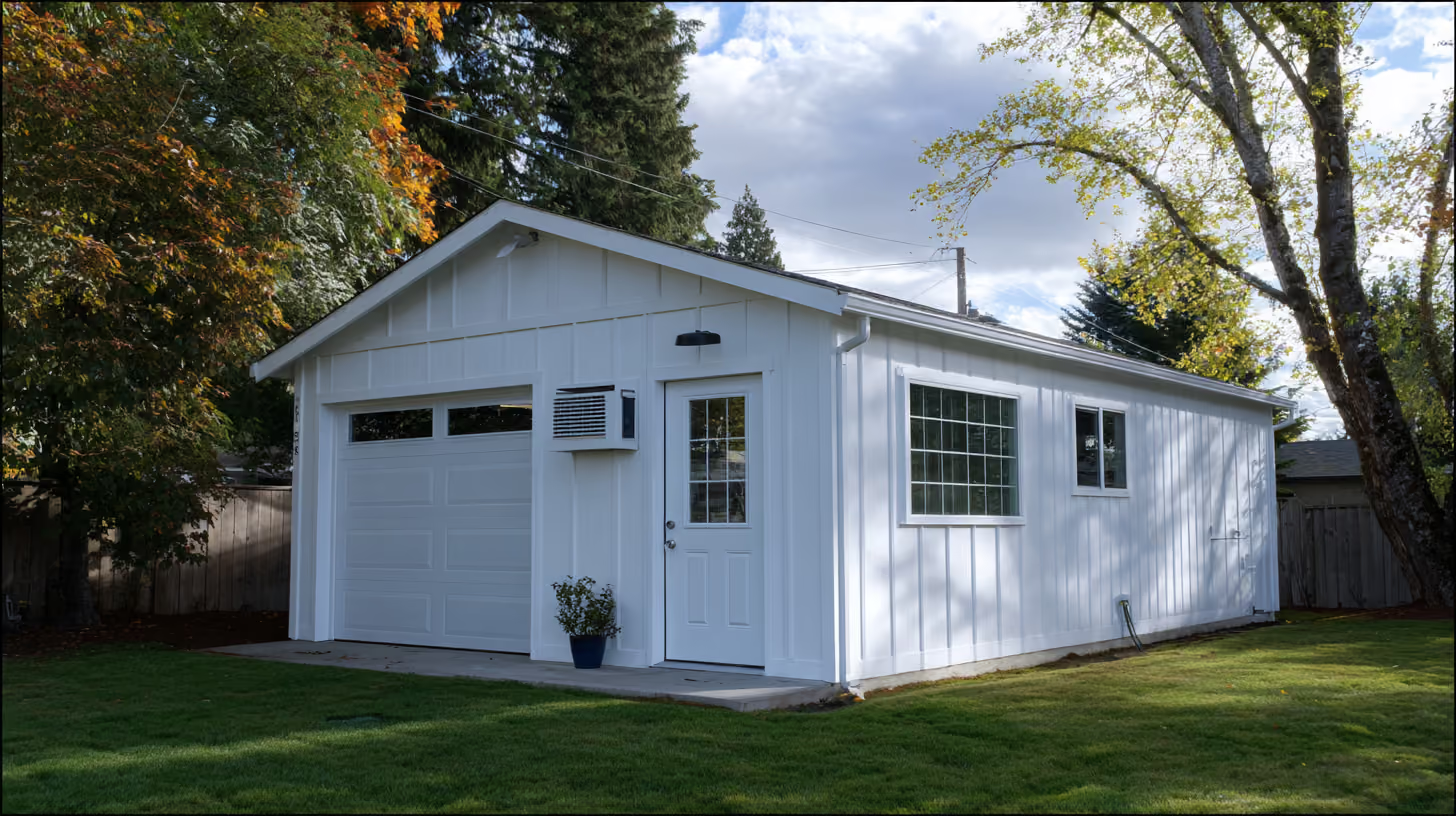
You’ve got a two-car garage sitting mostly empty. Or an oversized detached shop that doesn’t get used the way it used to. Converting it into a livable ADU is one of the smarter ways to add square footage in Clark County — lower cost than a new build, faster to permit, and the space is already there.
But there’s a difference between a garage conversion and a garage conversion done right. Here’s what you need to know before you start.
Does Your Garage Qualify?
Not every garage can become an ADU. A few things need to be true before the project makes sense:
- It has to meet minimum size requirements. Washington State requires ADUs to be at least 200 square feet. Clark County may have additional minimums depending on your zone. A one-car garage at around 250–300 sq ft is usually workable. A true two-car is easier.
- The structure needs to be sound. We’re talking foundation, framing, and roof. Some garages are built light — they’ll need upgrades to meet residential code before anything else happens. We check this during the consultation.
- Your lot has to allow it. Zoning rules vary across Clark County. Urban and suburban properties are generally more permissive. Rural zones sometimes have restrictions on ADU type or location. We pull the specifics for your parcel before any plans are drawn.
What a Garage-to-ADU Conversion Actually Involves
This isn’t just adding drywall and a toilet. A legitimate ADU conversion has to meet Washington State residential code, which means:
- Insulation. Garage walls and ceilings typically have none. You’ll need insulation that meets Washington’s energy code — which is stricter than most states.
- HVAC. The space needs heating and, in most cases, ventilation. Mini-splits are the most common solution for converted garages.
- Electrical. Garage wiring is built for tools and lights, not a living space. The panel and circuits will need to be brought up to residential standards.
- Plumbing. If the garage doesn’t have it, running water and sewer lines to it is a significant part of the project cost.
- Egress windows and ceiling height. Windows have to meet egress requirements. Ceilings generally need to be at least 7 feet. Some older garages are tight on this.
- Separate entrance. The ADU needs its own entry that doesn’t pass through the main home.
Permits in Clark County
You need a permit. Full stop. Unpermitted ADU conversions cause problems when you sell, can’t be legally rented, and may require being torn out or redone at your own expense if discovered.
In Clark County, a garage-to-ADU conversion typically requires a building permit, a plumbing permit, and an electrical permit. I See Construct handles the permit applications and coordinates with Clark County’s permit office — that’s included in how we run projects, not an add-on.
Detached vs. Attached Garage Conversions
Detached garages are often the cleaner conversion — the unit is fully separate, has its own entrance, and the main home isn’t disrupted during construction. Attached garages are workable too, but you’ll need fire separation between the ADU and the main living space, which adds scope.
What It Costs
Garage conversions in Clark County typically run $60,000–$120,000 depending on the size of the space, how much infrastructure (plumbing, electrical, HVAC) needs to be added, and finish level. A simple conversion on a larger, well-built detached garage comes in lower. A small attached garage that needs full plumbing rough-in comes in higher.
We give straight numbers. You’ll know what the project costs before we break ground.
Is It Worth It?
For most homeowners in Clark County — yes. A finished ADU adds to your property value, gives you a rental income option, and solves the “where does family stay?” problem without adding a separate structure. If you’re already sitting on a garage that’s underused, the cost-per-square-foot math usually works in your favor.
I See Construct has been building in Clark County for 30+ years. We know the codes, we know the permit office, and we’ve done this before. Call (360) 989-0118 or request a free consultation at iseeconstruct.com/additions-conversions.